The One Hundred of the Casino
text by Apollon Cristodulo
images by Apollon Cristodulo and Gabriel Puchiu
In the second half of 1951, a first group of political prisoners from Poarta Albă, i.e. from Canal, was sent to Constanța for restoration work on the Casino building, largely damaged after the war.

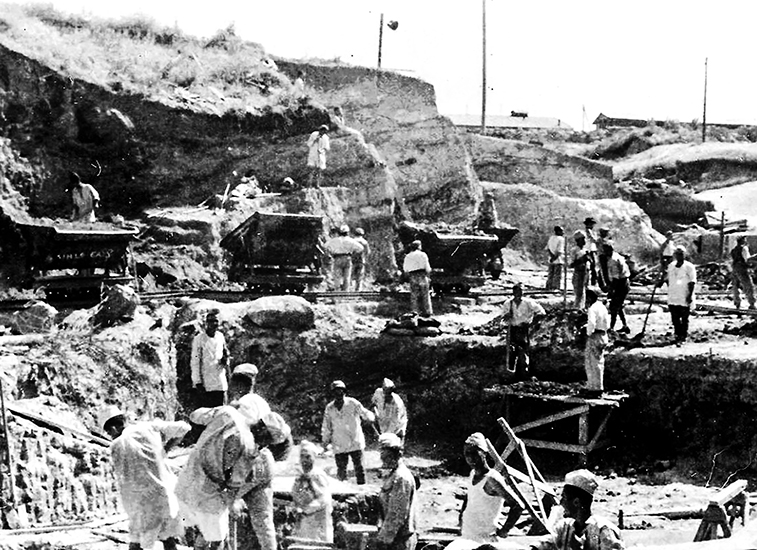
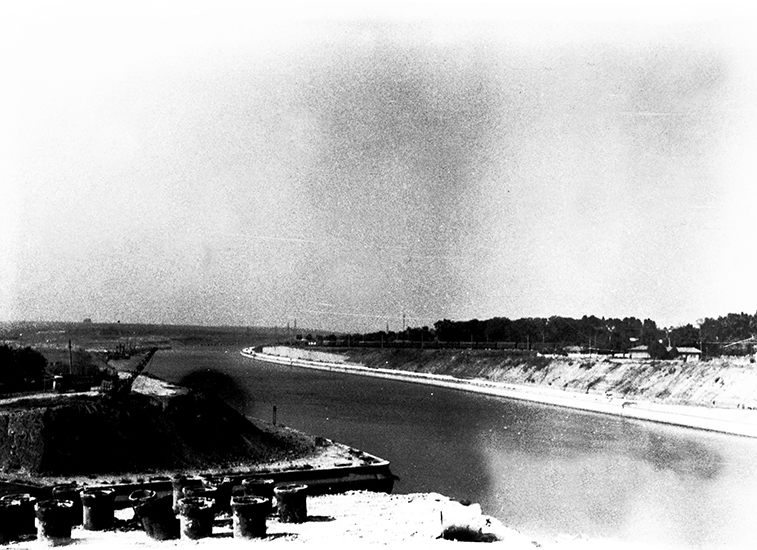
Prisoners working on a new canal to link the Danube with the Black Sea.
The team that worked until the completion of the works in March 1953 was composed of 100 prisoners.
Among them the architects Constantin Joja and Ion Cristodulo, as well as the construction engineer Ion Mărășescu.
As the story of their participation in the reconstruction of the building was known only through their own accounts and those of their descendants, for decades it was treated by most as an urban legend.
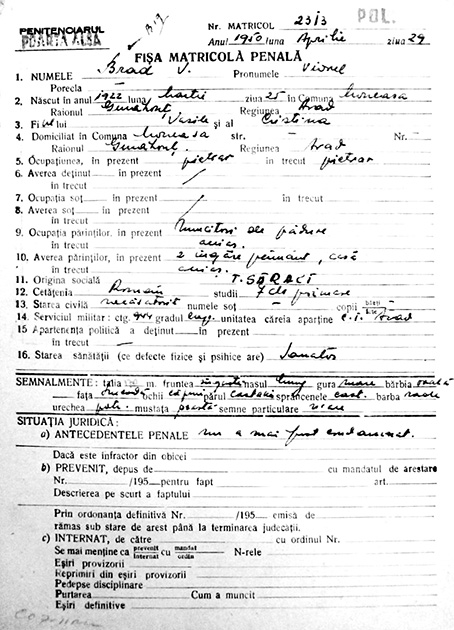
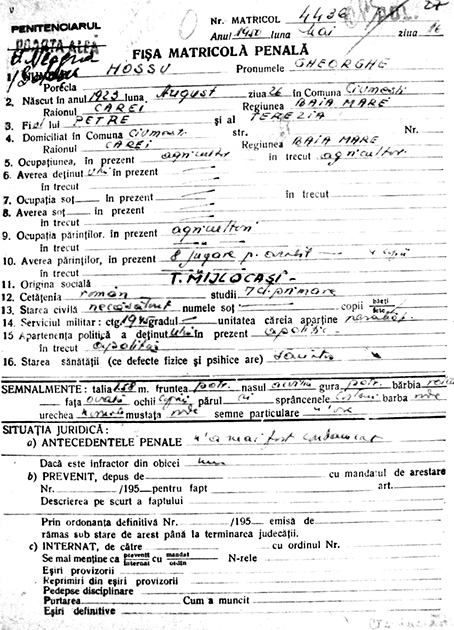
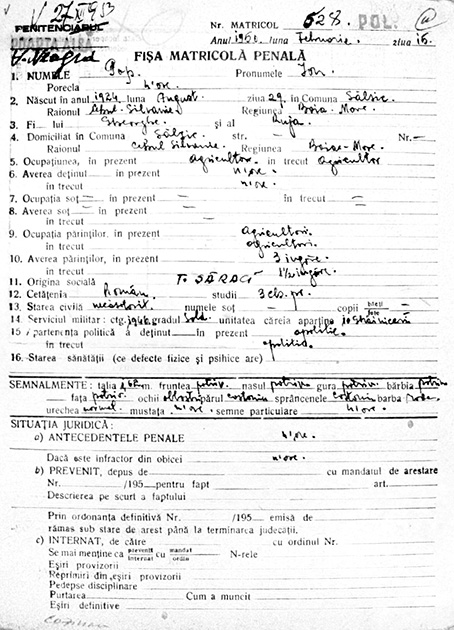
Documents of political prisoners from the Canal - Poarta Albă / Casino
However, in 2020, at the beginning of the most recent restoration of the building, a piece of sacking inscribed with the names of 16 of the political prisoners enclosed in brick was found in the masonry, and when this list partially overlapped with the list of names written from memory by former prisoner Mircea Nicolae,
in which 59 of those who rebuilt the Casino were mentioned, only then was the subject historically assumed and became official and public.
The Institute for the Investigation of the Crimes of Communism and the Memory of the Romanian Exile - IICCMER set the tone, starting the research in the pursuit of drawing up a report on this unprecedented episode of political detention in Romania.
This Casino is worked on by political prisoners of the year 1951 month 31 December. Led by Architect Joja Constantin. The stucco layers’ team led by Rusu A Ioan, Botoş Dumitru Arad County, Jercău Constantin, Ciscău Gheorghe, Coraş Ionel, Sava Nicolae, Popas Ioan, Vlădescu Ilie, Hosu Petre, Hosu Ghegor, Voicilă Nicolae, Anastasiu Ştefan, Gorbovan Gh., Bamer Fidel and Marton Iulius.
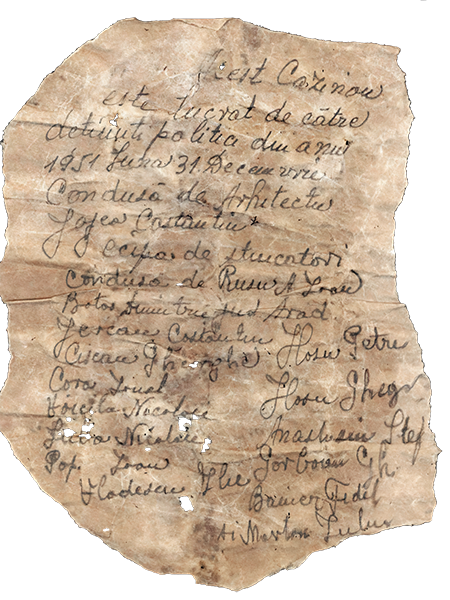
The letter found in 2020, naming some of the political prisoners working on the Casino.
Meanwhile, in 2023, a second note (of the Saxon prisoner Marton Iulius, written in German) was found in the Casino's masonry, as well as other evidence of forced labor, such as prisoners' signatures on the plaster-covered beams or on the reverse of some plaster elements. Last year, the testimonies of workers at a 1986 restoration of the Casino were also recorded, when letters from political prisoners from the 1950s were found in bags hidden in the four globes in the corners of the roof. Unfortunately, according to these witnesses, they were melted in the pitch boiler. Of course, part of the same category of evidence, the Letter of the architect Cristodulo to his child cannot be omitted, a magnificent artifact that survived improbably, but providentially, the detention.
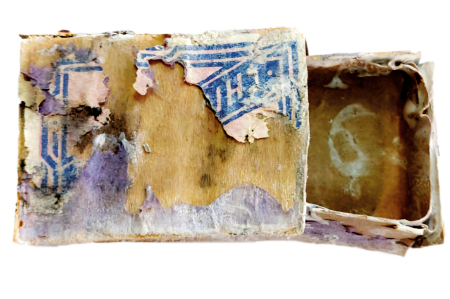
The matchbox containing the letter from prisoner Marton Iulius.
Beloved friend
whoever finds these words,
may God bless you.
I have been here as a political prisoner
since July 16, 1951, until now, May 1952,
working as a mason and carpenter.
I was sentenced to three years,
and since January 10, 1949,
my life has been in God's hands,
for I will not be free anytime soon.
But God is merciful.
With regards, Marton Iulius,
resident of Cisnădie, near Sibiu
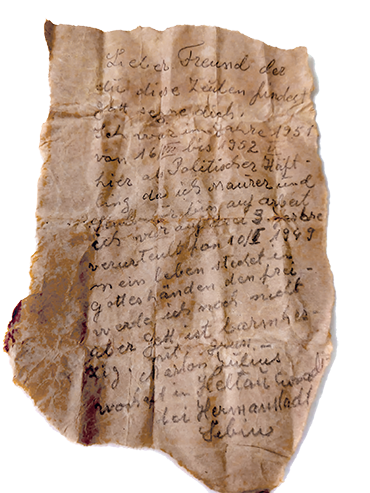
The letter written by Iulius Marton discovered in the masonry of the Casino in March 2023.
In the days when this Casino reopens, so in the year of grace 2025, following the combined research so far, over 80 names of bricklayers have been identified that are part of the immortal history of the unparalleled architectural pearl on the Black Sea coast.
Ion Omescu, a poet who literally ended up in chains, described the mission at the Casino as follows:
Here we will build a cathedral/ with thin and warm saints of kindness/ of faded gold and equal marble/ and half of us will perish...
In the poem called, as if inevitably, Manole to the disciples, he called the building a cathedral, a sanctuary built from its own ruins,
thus consecrating the transcendent dimension of the destiny of a political prisoner. While they were building, they, the prisoners, were also creating, and while they were erecting walls, they were rising.
Of course, at that moment, the persecuted were not all imbued with the sacredness of their own destiny, rather, they were overwhelmed by exhaustion, hunger, uncertainty, exasperation... but using their last energies to rebuild the mythological edifice, very likely the hope of their own restoration was also nourished from this process.
Looking back, salvation really came from this combination of cathedral and wheel of fortune, because, first of all, all 100 survived the works and, after their completion, gradually, but soon enough, all of them were - some only for a while, as it turned out - freed. Which does not mean that they escaped the consequences, especially the imperishable scars of the soul.
Years later, my father, the inmate Ion Cristodulo, a young architect and for 13 months (until the works were completed) the coordinator of the Casino lot, – perhaps also because many of his fellow inmates called him Cristo – still called the Casino something special: Chateau d'If... A name that fascinated me as a child, precisely because I understood the literary reference... Later, however, I understood the following: unlike Dumas' legendary Cristo, Monte Cristo, the new Cristo, the Master Cristo, never managed to truly escape from the fort of the traumas of detention. He had to carry their cross until the end of his earthly destiny. But not alone—together with the entire group of those persecuted during those times.
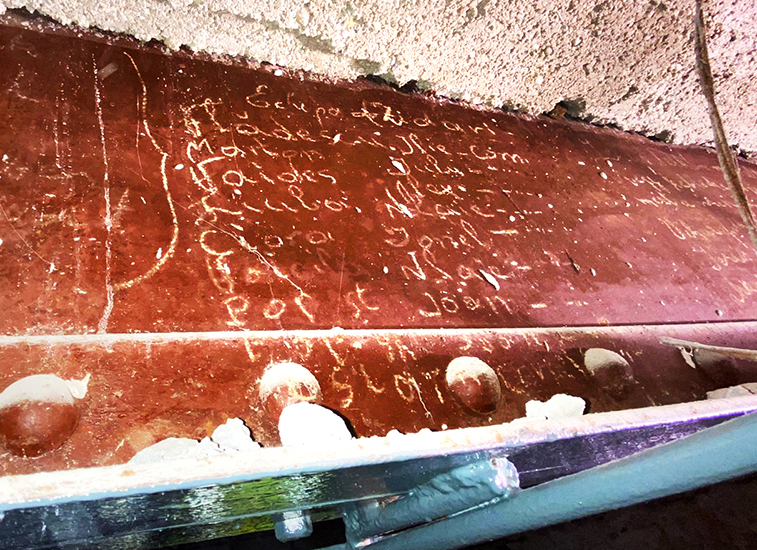
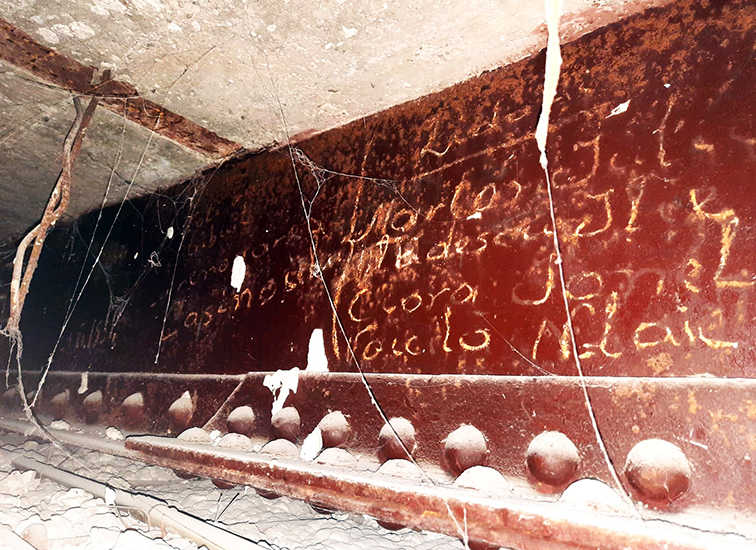
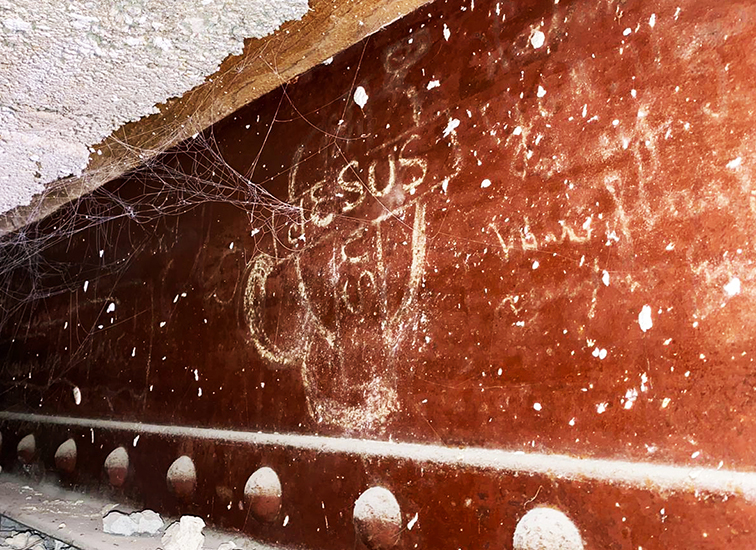
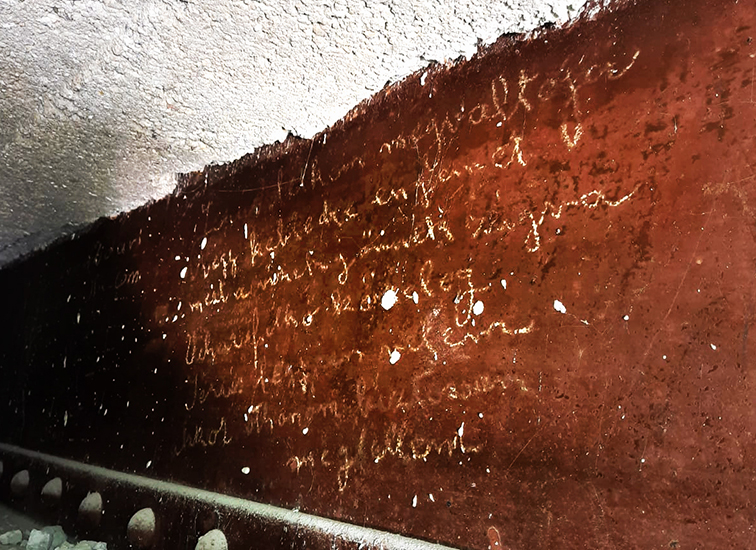
Some of the signatures from 1950/51 rediscovered in 2023.
Another political prisoner from the Casino, Gheorghe Bobia, concluded in a final testimony, recorded in 2009:
We will die and no one will know what we did there. That's how it will be! Only God knows if the world will find out about our story...
Strictly chronologically, he was right: none of the hundred from Casino was alive when the piece of paper that indisputably attested to their history was found. The last to leave was Mircea Nicolae, in 2017. But today, their story is free and spreading.
If we look at the overall picture, the Casino construction site represents only a micro-episode in the history of the local political gulag. In Romania, between 1948 and 1964, as part of the persecution launched against those who opposed the establishment of the Bolshevik ideology and the related political regime, hundreds of thousands of enemies of the people - according to some historians, over seven hundred thousand - were arrested and crushed in 70 prisons and 44 labor camps. Tens of thousands - according to some historians, over 100 thousand - lost their lives in these circumstances. In total, Romanian opponents of totalitarianism were deprived of their freedom for over two million years. Essentially, an eternity...
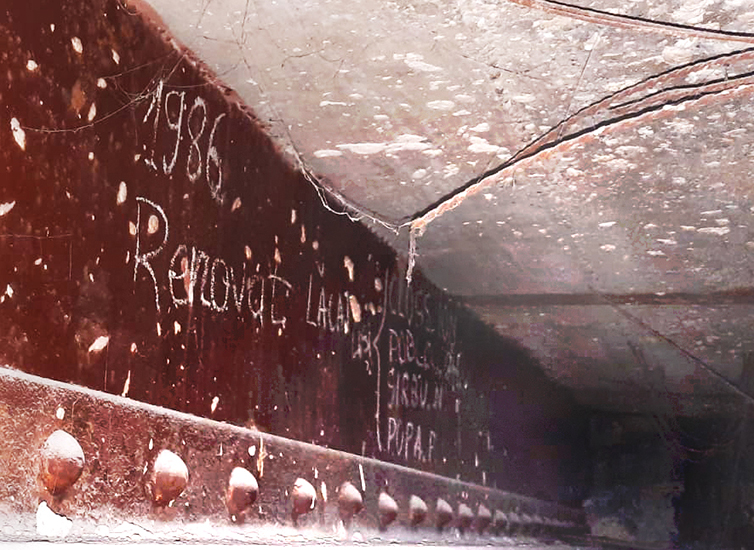

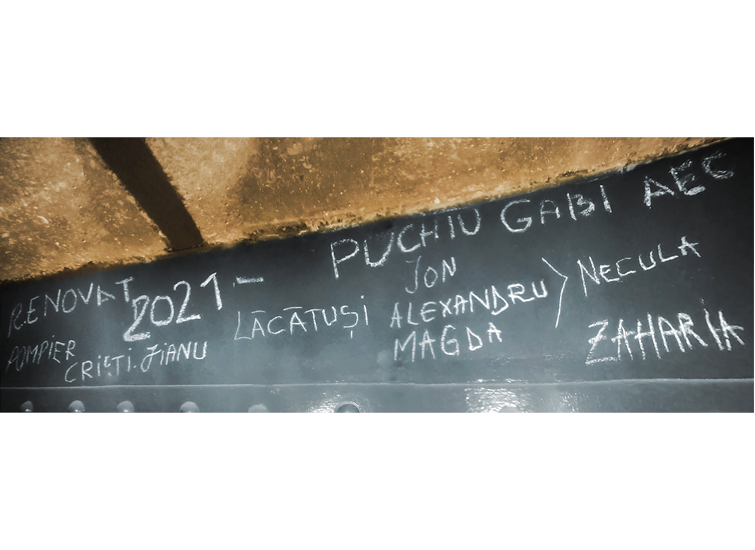
Completing the puzzle: In 1986 and again in 2021 workers added their names next to the signatures from 1951/52 - leaving the originals untouched.